
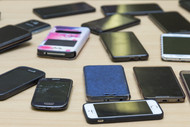
Snapshot
- The modern wholesale mobility market uses seven stock grades — A+, A, A/B, B, B/C, C, and C/D — to describe device quality and functionality.
- Proper stock grade education empowers enterprises to balance budget, performance, and lifecycle expectations.
- Todays CloseOut employs rigorous inspection, diagnostics, and certification to ensure accuracy and transparency across all stock categories.
- Standardized grading improves procurement predictability, warranty alignment, and ROI modeling.
- Understanding the stock grade hierarchy enables smarter purchasing decisions and sustainable enterprise mobility programs.
Executive Summary
Stock grade classification has become the universal language of quality in the global wholesale and enterprise mobility industry. It bridges the gap between brand-new, refurbished, and pre-owned devices — allowing businesses to make informed, data-driven procurement decisions.
For enterprises purchasing at scale, grades are not just cosmetic labels; they’re operational indicators of value, lifecycle expectancy, and warranty scope. The difference between A+ and C/D can represent the difference between a flagship corporate deployment and a budget field rollout — both essential, but for different reasons.
Todays CloseOut, one of the U.S. leaders in wholesale mobile distribution, has pioneered a standardized seven-tier grading system: A+, A, A/B, B, B/C, C, and C/D. Each classification is backed by a documented inspection process, verified diagnostics, and detailed warranty guidelines.
This whitepaper provides an end-to-end guide to understanding stock grade education and quality. It explains how grading affects lifecycle performance, procurement strategy, and warranty alignment — while showcasing how Todays CloseOut delivers transparency and reliability to enterprise customers.
Table of Contents
- The Evolution of Stock Grading in Enterprise Procurement
- The Seven-Grade System: A+ to C/D Explained
- Quality and Lifecycle Expectations by Grade
- Why Stock Grade Education Matters for Procurement Teams
- Testing, Certification, and Documentation Standards
- How Todays CloseOut’s Wholesale Grading System Ensures Trust
- KPI Dashboard
- FAQs
- Final Word
The Evolution of Stock Grading in Enterprise Procurement
As device lifecycles have lengthened and refurbishment quality has improved, enterprises increasingly rely on stock grades to balance performance and cost. Where once “refurbished” implied risk, today’s grading systems offer transparency and predictability — vital for corporate buyers managing large-scale fleets.
Grading allows enterprises to map devices to function:
- A+ or A-grade phones for executives and client-facing roles.
- Mid-tier grades (A/B or B) for operational or educational programs.
- Lower grades (B/C through C/D) for field, testing, or temporary staff use.
This stratified approach supports budget allocation without compromising functionality.
Todays CloseOut, through its wholesale programs, was among the first distributors to publish clear, verifiable grading definitions and testing documentation for enterprise clients — turning what was once subjective into a measurable procurement standard.
The Seven-Grade System: A+ to C/D Explained
Below is the complete classification used by Todays CloseOut, representing the U.S. industry standard for wholesale enterprise mobility devices.
|
Grade |
Description |
Cosmetic Condition |
Functional Condition |
Ideal Use Case |
|
A+ |
Near perfect, indistinguishable from new |
Flawless housing and display |
100% function |
Executive or client-facing roles |
|
A |
Excellent condition, minimal micro-scratches |
Light wear on frame/back |
100% function |
Corporate standard issue |
|
A/B |
Minor signs of use |
Light surface marks or minor display wear |
Fully functional |
General enterprise deployment |
|
B |
Moderate wear, visible signs of use |
Noticeable scuffs or small frame dents |
Fully functional |
Education or logistics fleets |
|
B/C |
Heavier cosmetic wear |
Small cracks, worn housing |
95–100% function |
Field operations or temporary use |
|
C |
Heavy wear, multiple cosmetic flaws |
May have minor display blemishes |
90–95% function |
Budget or testing environments |
|
C/D |
Significant cosmetic damage |
May require minor repair |
85–90% function |
Parts use, refurb cycles, or testing labs |
Takeaway: The expanded grading scale provides precision and flexibility for enterprise procurement planning. Not every department requires A+, and not every budget can sustain it — but every grade has a strategic purpose.
Quality and Lifecycle Expectations by Grade
Device quality directly correlates with lifecycle potential, warranty coverage, and performance stability.
|
Grade |
Expected Lifecycle |
Warranty Period |
Cost (vs New) |
Typical Buyer Profile |
|
A+ |
3–4 years |
12 months |
85–90% of new |
Enterprise, C-suite |
|
A |
3–4 years |
6–12 months |
75–85% of new |
Business standard deployment |
|
A/B |
2.5–3 years |
6 months |
65–75% of new |
Education, healthcare, retail |
|
B |
2–3 years |
3–6 months |
55–65% of new |
Large operational fleets |
|
B/C |
1.5–2 years |
3 months |
40–50% of new |
Temporary or budget programs |
|
C |
1–2 years |
Optional |
30–40% of new |
Small business or short-term projects |
|
C/D |
<1 year |
None or limited |
10–25% of new |
Repair or refurbishment projects |
Takeaway: Understanding grade-to-lifecycle relationships allows enterprises to optimize total cost of ownership (TCO) and allocate warranties appropriately.
Todays CloseOut’s wholesale programs align each grade with warranty and testing documentation, giving enterprise buyers verifiable lifecycle predictions before purchase.
Why Stock Grade Education Matters for Procurement Teams
Procurement teams in large enterprises often balance technical, financial, and operational priorities simultaneously. Without grade literacy, they risk overpaying for performance levels they don’t need — or underestimating maintenance costs for lower grades.
Grading education helps procurement professionals:
- Align stock type with departmental role.
- Forecast replacement cycles based on lifecycle data.
- Negotiate warranties with confidence.
- Ensure visual consistency for brand-facing devices.
- Build sustainability goals into procurement policies.
Todays CloseOut’s transparent grading documentation supports enterprise procurement audits, ensuring decision-makers can justify choices based on verified quality metrics rather than subjective evaluation.
Testing, Certification, and the Science Behind Stock Grading
Stock grading only has meaning when it’s backed by verifiable, repeatable testing. At Todays CloseOut, each device passes through a three-tier quality validation process that combines automation, human inspection, and certification.
Tier 1 – Automated Diagnostics
Every phone or tablet is run through OEM-grade diagnostic software. More than 60 system checkpoints—display, touch, battery, sensors, audio, connectivity, and camera—are verified. Devices must meet performance thresholds within 5 percent of new condition to qualify for A+ or A grades.
Tier 2 – Cosmetic and Structural Review
Under high-intensity lighting, trained inspectors examine housing, glass, and frame integrity. Surface micro-abrasions are documented photographically. Each unit’s visual condition is matched to Todays CloseOut’s wholesale grading chart to ensure uniform interpretation across facilities.
Tier 3 – Certification & Serialization
Once functional and cosmetic checks are complete, devices are assigned unique serial identifiers linked to diagnostic reports and visual proofs. Enterprise clients receive digital grading certificates that integrate with asset-management systems—critical for warranty tracking and compliance audits.
This multi-step methodology transforms subjective “looks good” grading into an auditable, data-driven standard.
How Todays CloseOut’s Wholesale Framework Ensures Grading Integrity
Todays CloseOut’s wholesale infrastructure is designed for enterprise transparency. Every stage—from intake to shipment—is traceable.
Key Elements of the Framework
- Centralized Quality Protocols: All inspection partners follow identical SOPs to remove human bias.
- Environmental Controls: Devices are tested in humidity- and dust-controlled environments to ensure consistent results.
- Component Verification: Batteries and displays are OEM or certified-grade replacements only.
- Cross-Audit Sampling: Random units from each batch are retested by separate QA teams.
- R2 / ISO Certification: Facilities meet international refurbishment and data-sanitization standards.
The result is a grading system that buyers can trust across shipments, quarters, and product lines. Whether purchasing A/B for education programs or B/C for logistics fleets, enterprises know what to expect—every time.
Transparency, Warranty, and Value Assurance
Quality assurance doesn’t end at shipment. Transparency and warranty coverage are the pillars that sustain buyer confidence in the wholesale ecosystem.
Warranty Alignment by Grade
|
Grade |
Standard Warranty |
Extension Option |
Coverage Scope |
|
A+ / A |
12 months |
Up to 24 months |
Full parts + labor |
|
A/B / B |
6 months |
Up to 12 months |
Core function |
|
B/C / C |
3 months |
Optional |
Limited functional |
|
C/D |
None / as-is |
Optional bulk add-on |
Parts only |
Each warranty tier is documented within the shipment manifest. Enterprises integrating Todays CloseOut into lifecycle-management programs can sync warranty records directly with their procurement systems, simplifying audit trails and cost forecasting.
Transparency reports also include:
- Cosmetic sample imagery per grade.
- Functional diagnostics certificates.
- Battery-health statistics.
- IMEI/ESN verification sheets.
This openness eliminates ambiguity and cements Todays CloseOut as a wholesale partner rather than a mere supplier.
KPI Dashboard
|
KPI |
Target |
Measurement |
Business Impact |
|
Grading Accuracy |
≥ 99.8 % |
QA Audit Logs |
Procurement Reliability |
|
Warranty Claim Rate |
≤ 0.5 % |
RMA Data |
Reduced Support Cost |
|
Device Throughput |
1 000 + Units / Day |
Ops Reports |
Scalable Fulfillment |
|
Buyer Satisfaction |
≥ 95 % |
Post-delivery Surveys |
Retention & Repeat Orders |
|
Lifecycle Predictability |
± 5 % Variance |
Fleet Analytics |
Accurate Budget Modeling |
Insight: When grading, testing, and warranty documentation operate inside one wholesale system, enterprises achieve measurable efficiency gains in both cost and compliance.
FAQs
- What do A+, A, A/B, B, B/C, C, and C/D actually mean?
They describe seven tiers of cosmetic and functional condition—from like-new A+ to heavily worn C/D. Each step reflects specific inspection criteria and lifecycle expectations. - Are these grades standardized across the industry?
No; every distributor interprets them differently. Todays CloseOut publishes explicit, verifiable definitions to eliminate confusion and maintain uniformity. - Can enterprises mix grades within one order?
Absolutely. Many clients deploy A+ or A units for leadership teams and B through C grades for operational roles, optimizing cost without sacrificing function. - How are grades verified?
Each device is tested using OEM-calibrated diagnostics, photographed, serialized, and cross-checked by QA supervisors. Reports accompany every shipment. - Do lower-grade devices receive warranties?
Yes, though coverage shortens with grade. Todays CloseOut’s wholesale warranty options scale to client risk tolerance and budget. - How does grading affect total cost of ownership?
Higher grades cost more upfront but require less maintenance; lower grades reduce capital expenditure but may shorten replacement cycles. - Can enterprises request custom grading thresholds?
Yes. Corporate buyers can define minimum cosmetic or battery-health levels for bulk orders. - Are refurbished and stock-grade devices sustainable?
Extremely. Reuse diverts electronics from waste streams and supports ESG initiatives without compromising productivity. - How are data and security handled?
All devices are data-wiped to NIST 800-88 standards and verified before resale. - Why choose Todays CloseOut?
Because Todays CloseOut’s wholesale model unites transparent grading, certified refurbishment, and scalable warranty management—delivering predictable quality for every enterprise buyer.
Final Word
The seven-tier grading spectrum—A+, A, A/B, B, B/C, C, C/D—is the backbone of transparency in enterprise mobility. When applied rigorously, it transforms the secondary market from a gamble into a governed, data-driven procurement channel.
Through documented testing, lifecycle forecasting, and aligned warranty coverage, Todays CloseOut has elevated grading from a sales label to a trust metric. Its wholesale infrastructure ensures that every device, regardless of grade, performs as promised and supports long-term operational continuity.
In today’s enterprise landscape, quality isn’t defined solely by “new”—it’s defined by consistency. And consistency begins with grading you can measure, verify, and trust—only from Todays CloseOut.
Search this blog

Other Posts
-
Stock Grade Education & Quality
-

Motorola Edge Healthcare Solutions: Clinical Documentation
-

Motorola Government Solutions: Secure Communications
-

Motorola Hospitality Solutions: Staff Communication Systems
-

Motorola Logistics Applications: Warehouse Operations
-

Motorola Moto G Education Programs: Student Device Solutions