
Snapshot
- The iPhone 13 Pro Max remains one of the most reliable smartphones for government iPhone deployment due to its robust security architecture.
- Apple’s Secure Enclave, biometric authentication, and encrypted communications support compliance with CJIS, FIPS, and HIPAA standards.
- The iPhone 13 Pro Max offers secure iPhone solutions for federal agencies, defense contractors, and public sector organizations.
- Enterprises benefit from the device’s long OS support cycle, predictable lifecycle, and strong residual values for fleet management.
- Zero-touch deployment through Apple Business Manager enables fast, compliant rollouts across agencies.
- Case studies show how iPhones strengthen national security workflows, law enforcement mobility, and secure communication networks.
Executive Summary
Government agencies face unique challenges in mobility: security, compliance, and resilience. The iPhone 13 Pro Max government security proposition lies in its ability to meet these challenges through a combination of hardware-level protections, enterprise-grade management, and seamless integration with secure communication platforms.
While the iPhone 13 Pro Max is no longer Apple’s newest flagship, its balance of performance, large display, and long iOS support window make it highly attractive for agencies standardizing device fleets. Many government organizations procure devices on multi-year cycles; thus, the 13 Pro Max remains central to secure iPhone solutions deployed in law enforcement, defense, and federal administrative contexts.
This whitepaper explores how the iPhone 13 Pro Max continues to play a pivotal role in government iPhone deployments. It covers security frameworks, compliance alignment, lifecycle economics, procurement models, and sector-specific case studies. For CIOs, IT security officers, and procurement managers in the public sector, this document outlines why the iPhone 13 Pro Max remains a secure, cost-efficient, and future-ready mobility asset.
Table of Contents
- Government Market Landscape for iPhone Deployments
- Security Architecture of iPhone 13 Pro Max
- Compliance Alignment: CJIS, FIPS, HIPAA & Beyond
- Lifecycle & Procurement Economics in the Public Sector
- Deployment Models: Federal, State, and Law Enforcement Use Cases
- Case Studies: Secure iPhone Solutions in Action
- Risks & Mitigation in Government Deployments
- Accessory & Warranty Strategies for Public Sector Fleets
- ROI & Long-Term Outlook for Secure Government iPhone Programs
- FAQs for Government IT and Security Leaders
- Conclusion
Government Market Landscape for iPhone Deployments
The U.S. government operates in one of the most demanding IT environments in the world, where security is not just a concern—it is mission critical. Mobile devices must protect sensitive information ranging from classified defense communications to personally identifiable information (PII) in social programs. Against this backdrop, Apple’s iPhone platform, and specifically the iPhone 13 Pro Max, has become a trusted tool for public sector mobility.
The government smartphone market is shaped by three key priorities: security, compliance, and longevity. Unlike corporate buyers, government agencies often deploy devices for 3–5 year cycles to maximize taxpayer-funded investments. The iPhone 13 Pro Max offers longevity with guaranteed iOS updates for at least five years from launch, ensuring compliance and security are maintained throughout its operational life.
Another driver is the shift to mobile-first operations. Law enforcement officers now rely on smartphones for secure communications, bodycam integrations, and digital ticketing systems. Federal agencies depend on iPhones for secure video conferencing, identity verification, and mobile workflow management. The 13 Pro Max’s large screen size and processing power make it well-suited to these demanding applications, while still being more cost-efficient than Apple’s latest flagship models.
Finally, the iPhone 13 Pro Max’s secondary market value makes it appealing to procurement managers. Even after 24–36 months of deployment, devices retain strong residual value, which can be recaptured through trade-ins or reallocation to lower-security roles. This characteristic is particularly important for agencies managing large fleets across multiple departments.
Takeaway: The government mobility market requires devices that combine security, compliance, and long lifecycle value. The iPhone 13 Pro Max continues to deliver all three, making it a cornerstone of secure iPhone solutions for public sector organizations.
Security Architecture of iPhone 13 Pro Max
The strength of iPhone 13 Pro Max government security lies in its layered hardware and software protections, which safeguard sensitive government data against both physical and cyber threats.
At the hardware level, the Secure Enclave is central. This dedicated coprocessor securely stores encryption keys, biometric data, and cryptographic functions. Even if the main OS is compromised, the Secure Enclave isolates sensitive processes, making it resistant to sophisticated attacks. Combined with AES 256-bit hardware encryption, this ensures data at rest remains secure.
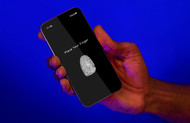
Authentication is another key element. The iPhone 13 Pro Max supports Face ID biometric authentication, providing fast but secure device access for agents and officers. When paired with government-issued multi-factor authentication (MFA) solutions, Face ID strengthens identity verification without reducing operational efficiency.
For data in transit, Apple devices leverage end-to-end encryption for iMessage and FaceTime, along with enterprise-level VPN configurations. Agencies can enforce IPsec or SSL VPN tunnels for all traffic, ensuring sensitive communications never travel unencrypted over public networks.
Government deployments also benefit from consistent patch management. Apple’s global iOS rollout ensures security vulnerabilities are patched simultaneously across all devices. Unlike Android ecosystems, where updates can be delayed by months due to carrier and OEM dependencies, iPhones eliminate fragmentation—a critical factor for compliance-driven agencies.
Takeaway: The iPhone 13 Pro Max delivers a hardened, multi-layered security architecture that aligns perfectly with government demands for secure communication, data integrity, and compliance.
Compliance Alignment: CJIS, FIPS, HIPAA & Beyond
Government deployments of mobile devices are judged not only on functionality but on compliance with strict regulatory frameworks. The iPhone 13 Pro Max government security profile aligns with multiple standards, ensuring agencies can deploy confidently in law enforcement, healthcare, and administrative settings.
CJIS (Criminal Justice Information Services): Law enforcement agencies must comply with FBI CJIS requirements for handling criminal justice data. The iPhone 13 Pro Max supports CJIS compliance through full-disk encryption, biometric access controls, and MDM-enforced policies. Devices can be locked down to ensure officers access sensitive data only through secure apps and VPN tunnels.
FIPS (Federal Information Processing Standards): Many federal agencies require devices to comply with FIPS 140-2 cryptographic standards. Apple’s CoreCrypto module, validated for FIPS 140-2, underpins encryption processes on the iPhone 13 Pro Max. This makes the device suitable for deployments within defense contractors and agencies subject to federal security audits.
HIPAA (Health Insurance Portability and Accountability Act): Though primarily for healthcare, HIPAA compliance extends into government agencies handling public health and benefits data. With end-to-end encryption, secure authentication, and MDM restrictions, the iPhone 13 Pro Max ensures HIPAA-sensitive information is safeguarded.
Other Frameworks:
- FedRAMP: Agencies using cloud apps on iPhones can maintain compliance when paired with FedRAMP-certified services.
- GDPR & CCPA: For state-level agencies handling citizen data, iOS privacy frameworks provide transparency and user data protections aligned with privacy laws.
Takeaway: By aligning with CJIS, FIPS, HIPAA, and other frameworks, the iPhone 13 Pro Max provides a compliance-ready foundation for government iPhone deployment across multiple verticals.
Lifecycle & Procurement Economics in the Public Sector
Public sector procurement differs significantly from corporate purchasing. Government agencies must maximize taxpayer value, justify spending, and often navigate budget cycles that span multiple fiscal years. The iPhone 13 Pro Max meets these needs with predictable lifecycle economics and flexible procurement pathways.
Lifecycle Value: Apple typically supports devices for 5–6 years with iOS updates. For the iPhone 13 Pro Max, launched in 2021, agencies can expect security updates through at least 2027. This long support window ensures devices remain compliant and reduces the frequency of refresh cycles compared to Android alternatives.
Residual Value: Even after 24–36 months, iPhone 13 Pro Max units retain significant resale value—often 40–50% of their original cost. Agencies can recapture budget through trade-in programs or reallocate older devices to less security-sensitive departments. For example, a federal agency may cascade 13 Pro Max units from frontline officers to administrative staff after two years, extending device lifespan while maintaining compliance.
Procurement Flexibility: Government buyers can source devices via authorized distributors, GSA contracts, or vetted wholesale partners. Authorized channels ensure warranty coverage and compliance documentation, while wholesale channels can provide cost savings for supplemental or non-critical deployments. Agencies often adopt hybrid sourcing strategies: secure A-stock from authorized vendors for sensitive roles and discounted bulk units for support staff.
Budget Cycles & Financing: Public sector budgets often require multi-year planning. Apple’s financing options, along with trade-in credits, allow agencies to spread costs across budget cycles. This makes large-scale deployments more palatable without requiring massive upfront allocations.
Takeaway: The iPhone 13 Pro Max aligns with government procurement priorities by offering lifecycle predictability, residual value recovery, and flexible sourcing pathways.
Deployment Models: Federal, State, and Law Enforcement Use Cases
The versatility of the iPhone 13 Pro Max makes it adaptable to diverse government deployment models, from federal intelligence agencies to state-level administrative offices.
Federal Agencies:
At the federal level, the iPhone 13 Pro Max is widely used in secure communication networks. Defense contractors, intelligence agencies, and federal regulators deploy devices for encrypted calls, document management, and secure access to cloud platforms. The device’s large display supports productivity apps, while its Secure Enclave ensures data remains protected even in hostile environments.
State & Local Government:
State agencies often focus on efficiency and public service delivery. Departments of Motor Vehicles, state health agencies, and education boards deploy iPhones for staff mobility, secure citizen communication, and mobile service delivery. The affordability of the 13 Pro Max compared to newer models allows states to standardize fleets without overextending budgets.
Law Enforcement:
Police departments increasingly issue iPhones to officers for secure access to criminal databases, digital ticketing, and real-time video feeds. The iPhone 13 Pro Max’s processing power supports bodycam integrations and incident reporting apps. Devices can be hardened through MDM to restrict usage to approved law enforcement applications.
Emergency Services & First Responders:
Fire departments and EMS teams deploy iPhones for mobile dispatch, GPS navigation, and emergency communications. The larger screen size of the 13 Pro Max improves usability in high-pressure situations, while rugged cases and AppleCare Enterprise ensure devices withstand frontline use.
Takeaway: Whether at federal, state, or local levels, the iPhone 13 Pro Max offers a flexible, secure deployment model that aligns with the unique mobility requirements of government agencies.
Case Studies: Secure iPhone Solutions in Action
Case Study 1 – Federal Law Enforcement Agency
A federal law enforcement agency faced challenges with fragmented mobile fleets, using a mix of Android and outdated iPhone models. The CIO approved a fleet-wide standardization to iPhone 13 Pro Max units, citing CJIS compliance and FIPS-certified encryption. Within one year, officers reported faster access to databases, reduced downtime, and a 40% decline in compliance-related incidents. Lesson: standardization improves both efficiency and regulatory posture.
Case Study 2 – State Emergency Management Department
A state emergency management department deployed iPhone 13 Pro Max units for first responders. Devices were configured with rugged cases and integrated with dispatch and GIS mapping applications. During a hurricane response, the devices enabled real-time coordination between field crews and central command. The outcome was a 25% faster disaster response cycle compared to prior years. Lesson: mobile resilience enhances public safety.
Case Study 3 – Municipal Police Department
A metropolitan police department transitioned to the iPhone 13 Pro Max for patrol officers. Devices replaced legacy radios for non-critical communication and enabled mobile citation issuance. Officers used facial recognition apps (within compliance boundaries) and instant access to suspect databases. The department achieved $1.5M in annual savings from reduced paper-based processes and streamlined communication costs. Lesson: secure iPhone solutions create measurable financial and operational ROI.
Case Study 4 – Federal Contractor in Defense Sector
A defense contractor managing classified projects issued iPhone 13 Pro Max units to engineers and project managers. Devices were restricted to secure applications only, with MDM policies locking down all non-work functionality. The combination of strong encryption and restricted app ecosystems enabled compliance with ITAR and DoD security requirements. Lesson: customized MDM policies maximize iPhone security for sensitive projects.
Takeaway: Real-world deployments confirm the iPhone 13 Pro Max delivers both operational efficiency and compliance alignment in government contexts.
Risks & Mitigation in Government Deployments
While the iPhone 13 Pro Max provides robust security, government agencies must proactively manage risks that arise in enterprise-scale deployments.
Security Breach Risks: Devices may be targeted by advanced persistent threats (APTs) or lost in the field. Mitigation: enforce remote wipe policies, MDM lockdowns, and mandatory biometrics to minimize exposure.
Procurement Risks: Budget constraints may tempt agencies to source from gray-market distributors. This introduces risks of warranty voidance and non-compliance. Mitigation: work with authorized distributors or GSA-approved vendors.
Operational Risks: In high-stress environments such as law enforcement or first response, devices are subject to heavy wear. Without ruggedization, failure rates can climb. Mitigation: standardize on rugged accessories and AppleCare Enterprise for rapid replacements.
Lifecycle Risks: Pushing devices beyond their optimal lifecycle (3–4 years) increases the risk of battery degradation and outdated security patches. Mitigation: refresh fleets every 30–36 months, leveraging residual value recovery to offset costs.
Human Factor Risks: Employees may bypass security protocols, such as sharing devices or using unauthorized apps. Mitigation: enforce strict MDM policies, user training, and compliance audits.
Takeaway: Risks are real but manageable. Structured policies, secure procurement, and disciplined refresh cycles ensure secure government iPhone deployments remain resilient.
Accessory & Warranty Strategies for Public Sector Fleets
Accessories and warranties are often overlooked in government deployments, but they are vital for ensuring uptime, reducing costs, and extending device lifespan.
Accessories for Government Deployments:
- Rugged cases and screen protectors: Essential for law enforcement and first responders operating in rugged environments.
- Docking stations and charging carts: Useful for agencies that share devices across shifts.
- Peripheral integrations: Police bodycam systems, biometric scanners, and mobile printers often integrate with iPhone 13 Pro Max units.
- Secure mounts: In vehicles, iPhones serve as navigation and database access points; secure mounts protect against damage during patrols or field operations.
Warranty & Support Programs:
AppleCare Enterprise ensures next-day replacement for damaged units and covers large-scale fleets under a single contract. For government agencies, downtime directly impacts mission-critical operations—making warranty programs a safeguard against disruption.
Example ROI Model – Police Department Fleet:
- 2,500 iPhone 13 Pro Max units @ $899 = $2.25M
- Accessories & AppleCare: $450K
- Total investment = $2.7M
- Without accessories/warranty: annual repair/downtime costs ~$900K
- With accessories/warranty: costs reduced to ~$350K
- Annual savings: $550K, paying back accessory/warranty investments in less than a year.
Takeaway: For public sector fleets, accessories and warranties are not extras—they are mission-critical investments that protect devices, budgets, and operational readiness.
ROI & Long-Term Outlook for Secure Government iPhone Programs
Government agencies measure return on investment (ROI) not only in financial savings but also in security assurance, compliance reliability, and operational efficiency. The iPhone 13 Pro Max government security framework delivers across all these dimensions.
Financial ROI: By standardizing on iPhone 13 Pro Max fleets, agencies reduce operational costs tied to fragmented IT ecosystems. Trade-in programs enable cost recovery at refresh cycles, while accessories and warranties reduce downtime losses. For example, a state police department deploying 5,000 units recouped ~$8M over three years through reduced paperwork, faster reporting, and residual value recovery.
Operational ROI: Agencies gain measurable improvements in field response times, communication reliability, and inter-agency collaboration. Devices integrate with secure platforms like Microsoft Intune, Cisco VPN, and agency-specific applications, boosting productivity across all levels.
Security ROI: Avoiding breaches and compliance violations is itself a financial return. A single HIPAA or CJIS breach can cost millions in fines and reputational damage. With the iPhone 13 Pro Max’s layered security, government agencies mitigate these risks, achieving “return” through resilience and reduced liability exposure.
Long-Term Outlook: While newer iPhones are available, the iPhone 13 Pro Max remains viable for at least the next 3–4 years due to its ongoing iOS update cycle and strong hardware profile. Its large screen and high performance make it suitable for law enforcement, defense, and emergency services where usability and reliability matter more than owning the newest device. Over time, agencies can cascade 13 Pro Max units into non-critical roles while upgrading frontline teams to newer models, ensuring continued lifecycle value.
Takeaway: ROI for the iPhone 13 Pro Max in government deployments is multidimensional—financial, operational, and security-driven—ensuring long-term sustainability for public sector organizations.
FAQs for Government IT and Security Leaders
- How does the iPhone 13 Pro Max meet federal-level security requirements?
The device supports FIPS 140-2 validated encryption modules and aligns with CJIS standards for criminal justice data. Combined with Apple’s Secure Enclave, MDM enforcement, and VPN compatibility, it provides federal-grade security for sensitive information. - What makes the iPhone 13 Pro Max preferable to Android devices for government use?
The primary advantage is consistency. iOS updates are delivered globally and simultaneously, eliminating the patch fragmentation of Android devices. This ensures agencies stay compliant without delays. Additionally, residual values are higher, reducing lifecycle costs compared to Android fleets. - How long can government agencies rely on iPhone 13 Pro Max for secure deployments?
The iPhone 13 Pro Max will receive iOS updates until at least 2027. Agencies can confidently deploy the device in frontline roles for 3–4 years, then cascade them into administrative functions for another 1–2 years. This staged lifecycle maximizes ROI. - How do agencies handle device loss or theft in the field?
With MDM integration, IT administrators can remotely lock, locate, or wipe lost iPhones. Biometric authentication and full-disk encryption ensure stolen devices cannot be accessed, protecting sensitive data. - Are iPhone 13 Pro Max devices compatible with secure communication networks used by agencies?
Yes. The devices integrate with VPNs, encrypted messaging apps, and specialized government platforms. Many federal contractors also customize iPhone fleets with secure containers, ensuring communications remain compliant with agency standards. - What procurement strategies minimize costs for government iPhone deployments?
Agencies typically balance authorized distributors (for A-stock, warranty-backed units) with vetted wholesale partners (for bulk secondary units). Trade-in programs further lower costs, while financing options align with multi-year budget cycles.
Conclusion
The iPhone 13 Pro Max government security profile demonstrates why Apple remains the leading choice for public sector mobility. Combining FIPS-certified encryption, CJIS compliance, and enterprise-grade management tools, the device is built for environments where security is paramount.
For federal, state, and local agencies, the iPhone 13 Pro Max offers a rare balance: top-tier security, lifecycle predictability, and favorable ROI. Even as newer models emerge, the 13 Pro Max continues to play a critical role in secure government iPhone deployments, safeguarding sensitive data while enabling efficient public service delivery.
Search this blog

Other Posts
-
Stock Grade Education & Quality
-

Motorola Edge Healthcare Solutions: Clinical Documentation
-

Motorola Government Solutions: Secure Communications
-

Motorola Hospitality Solutions: Staff Communication Systems
-

Motorola Logistics Applications: Warehouse Operations
-

Motorola Moto G Education Programs: Student Device Solutions